The Secret to Smooth Boat Maneuvering in Tight Spaces
Ever seen a 45-foot yacht squeeze into a slip barely wider than the boat itself? Without bumping a single piling? I’ve watched captains pull this off while others crash into docks like they’re playing bumper boats.
The difference isn’t luck. It’s technique.
Whether you’re navigating a crowded marina or docking in crosswinds, mastering boat maneuvering in tight spaces is what separates the amateurs from the pros. And contrary to what many believe, it doesn’t require decades of experience.
By the end of this guide, you’ll understand exactly how to position your boat’s pivot point, use your throttle as a precision tool, and employ those bow thrusters effectively instead of in panic mode.
But first, let me share the counter-intuitive secret that changed my docking game forever…
Understanding Boat Dynamics in Confined Areas

A. How boat size affects maneuverability
Ever tried parking a semi-truck in a compact car spot? That’s basically what docking a large boat in a small marina feels like. Boat size is the #1 factor in how well you’ll handle tight spaces.
Smaller boats (under 25 feet) pivot quickly and respond almost immediately to steering inputs. They’re the sports cars of the water world. But larger vessels? They have what we call “momentum memory” – they keep moving in whatever direction they were heading, even after you’ve turned the wheel.
Most beginners make this crucial mistake: they approach confined areas with the same speed regardless of boat size. Big mistake. Your approach speed should decrease significantly as your boat length increases.
B. Impact of wind and current on tight space navigation
Wind and current are the invisible bullies of boat handling in confined areas. They’ll push you right into that expensive yacht while you helplessly spin the wheel.
Here’s the truth about boat control in confined areas: the slower you go, the more these forces affect you. Counter-intuitive, right?
A 15-knot crosswind might barely nudge your boat at cruising speed, but it’ll completely derail your perfect docking approach at 2 knots. Always check which way the wind socks are pointing before attempting tight maneuvers.
C. Weight distribution fundamentals for better control
The way weight sits in your boat dramatically impacts handling in tight quarters. Most precision boat handling problems stem from poor weight distribution.
Front-heavy boats plow through turns, while stern-heavy boats spin too quickly. For optimal maneuvering vessel control, keep weight centralized and balanced port to starboard.
When passengers suddenly rush to one side during docking (the “helpful spectator shuffle”), your carefully planned approach goes haywire. Station your guests before approaching tight spaces and kindly ask them to stay put!
Essential Equipment for Precision Maneuvering
Bow and Stern Thrusters: When and How to Use Them
Ever tried to parallel park a 35-footer in 20-knot winds? Without thrusters, you might as well try juggling while riding a unicycle. Bow and stern thrusters are game-changers for boat maneuvering in tight spaces.
Bow thrusters work best when:
- Docking sideways with limited space
- Fighting crosswinds that push your bow off course
- Making precise adjustments without forward momentum
Use them in short bursts rather than continuous operation. Think of them as gentle nudges, not brute force pushes.
Stern thrusters complement your bow thrusters perfectly for rotating your vessel in place. The magic happens when you use them together – bow thruster pushing one way, stern thruster the opposite. Your boat pivots like it’s on a turntable.
Spotlight and Visibility Tools for Night Docking
Night docking without proper lighting is like walking through a minefield blindfolded. A quality spotlight with at least 100,000 candlepower gives you critical visibility when confined space boat navigation gets tricky after dark.
Mount your primary spotlight where you can aim it one-handed. Handheld backups are essential too. Many experienced captains install LED strip lighting along the gunwales to illuminate their boat’s perimeter instantly.
Don’t forget polarized sunglasses for daytime glare – they’re as crucial as spotlights are at night for precision boat handling.
Fenders and Bumpers: Proper Placement for Protection
Even expert boat handlers use fenders. They’re insurance policies, not admission of poor boat handling skills.
For optimal protection:
- Position fenders at the widest beam section
- Hang them just above the waterline
- Use at least three per side in rough conditions
- Double-tie each fender with different attachment points
Cylinder fenders work best along straight hulls while ball fenders excel at protecting corners and transoms.
Communication Devices for Coordinating with Crew
Nobody masters boat docking in tight spaces solo. Clear communication with your crew makes all the difference.
Wireless headsets eliminate the shouting matches that stress everyone out during docking. They keep your hands free and communication clear even in windy conditions.
Hand signals serve as an excellent backup system. Establish your signals before approaching the dock – pointing, thumb directions, and palm gestures should all have specific, understood meanings.
Master Techniques for Tight Docking
A. The pivot point approach for narrow slips
Ever noticed how your boat pivots differently when moving forward versus reverse? That’s your pivot point shifting, and it’s your secret weapon for tight slips.
When going forward, your pivot point is near the bow. In reverse, it moves aft. Smart captains use this to their advantage.
Try this: When approaching a narrow slip, position your boat at a slight angle, then use the pivot point to swing your stern in. Cut your speed early – you want just enough momentum to maintain steering control.
Most docking disasters happen because boaters carry too much speed. Take it slow, feel how your vessel responds, and let physics do the work.
B. Prop walk techniques to your advantage
Your propeller doesn’t just push water backward – it creates a sideways force too. This “prop walk” makes your stern kick port or starboard depending on your prop’s rotation.
Right-hand props (most common) walk to port in reverse. Left-hand props do the opposite.
I used to fight against prop walk until I realized it’s actually a built-in steering assist. Need to nudge your stern port while backing? A quick burst in reverse with a right-hand prop does the trick.
The key is practicing until you instinctively know how your boat will respond. Some captains can park in spaces barely longer than their boats just by mastering prop walk.
C. Spring line strategies for controlled movement
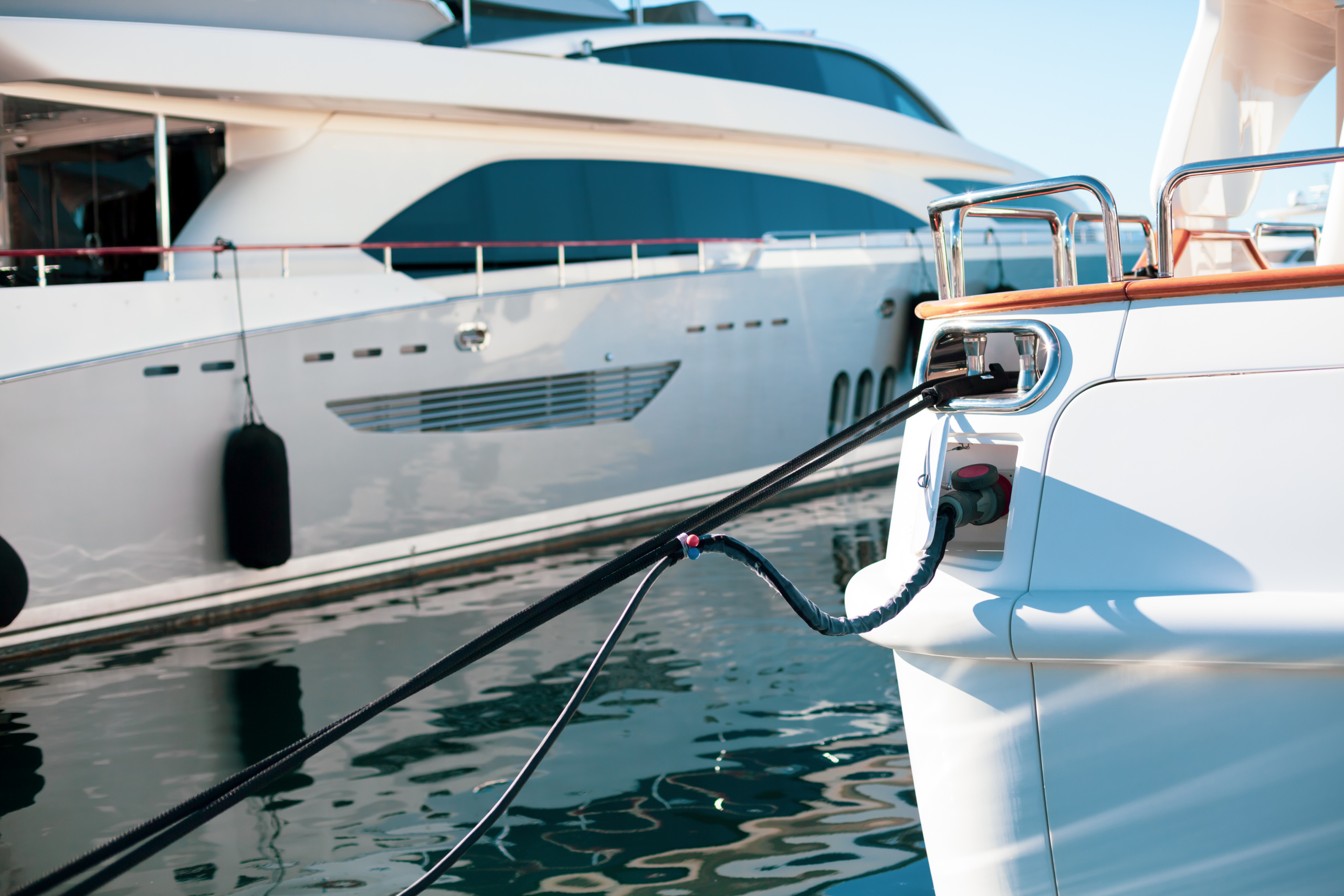
Spring lines are possibly the most underused tools for tight docking. They transform your boat’s pivot capabilities.
Here’s a game-changer: Secure a midship spring line to a dock piling, then use gentle throttle against it. Your boat will pivot around the line like it’s on rails.
For a bow-in approach, use an after spring. For stern-in, use a forward spring.
What makes spring lines magical is control. Even in wind or current, they give you a fixed point to work around, eliminating drift and unpredictability.
D. The “step-by-step” method for beginners
Docking anxiety is real. Break it down into smaller tasks:
- Approach slowly, analyzing wind and current
- Position your boat parallel to the dock, about a boat width away
- Shift to neutral and let momentum carry you
- Use small, controlled throttle bursts only when needed
- Secure your midship line first, then use it to control positioning
The biggest mistake? Rushing. Give yourself permission to take your time.
If conditions aren’t right, there’s no shame in aborting and trying again. Even pros do this.
E. Single-handed docking secrets
Docking solo requires planning. Set up your boat beforehand with:
- Lines coiled and ready
- Fenders pre-positioned
- Boat hook within reach
Master the neutral glide technique – approach in neutral, using momentum and occasional throttle taps.
The helm lock trick works wonders: quickly lock your wheel/tiller while you step away to handle lines.
Pre-tied loops make securing lines to cleats much faster when you’re juggling tasks. Have them ready.
Many single-handers develop a personal “choreography” for docking. Mine includes positioning the boat, securing the midship line first, then handling bow and stern.
Handling Challenging Conditions

A. Strong crosswind strategies
Ever tried docking with a 20-knot wind pushing you sideways? It’s like trying to parallel park on an ice rink.
When facing crosswinds, approach at a sharper angle than normal – about 20-30 degrees. This gives you better control as you enter the confined space. Your boat’s windward side becomes your friend here.
Try this trick: use the wind to your advantage by positioning your boat so the wind pushes you toward your landing spot. It’s counterintuitive, but fighting the wind is usually a losing battle.
Keep your speed slightly higher than normal – not racing speed, but enough momentum to maintain steering control. Too slow and you’re just a leaf in the wind.
B. Navigating strong currents near marina entrances
Marina entrances can be deceptive beasts. The current might look tame from a distance, but it’s often strongest right at the bottleneck.
Always approach against the current when possible. This gives you more control and slower ground speed for boat handling in confined areas.
Watch how other boats are sitting in their slips – they’re your current indicators. If they’re pointing oddly or straining against their lines, you know what you’re dealing with.
C. Maneuvering in shallow water situations
Shallow water changes everything about boat control in confined areas. Your vessel behaves differently – usually sluggishly and less responsively.
Trim your engine up slightly to avoid propeller damage but not so much that you lose steering. A damaged prop means zero precision boat handling.
Move deliberately and slowly. Quick throttle changes in shallow water kick up silt, reducing visibility when you need it most. Plus, your wake bounces back from nearby shores, potentially pushing you off course.
Remember the “prop walk” effect is amplified in shallow water, making your stern swing more dramatically during maneuvering.
Practice Exercises to Build Confidence
A. The figure-eight drill for improved control
Want to nail boat maneuvering in tight spaces? The figure-eight drill will change your game completely.
Find an open area with two buoys (or any markers) placed about three boat lengths apart. Your mission? Navigate your boat in a figure-eight pattern around these markers.
Start slow. Make deliberate, smooth turns using minimal throttle adjustments. Feel how your boat responds to each steering input and throttle change. The magic happens when you maintain a consistent distance from each marker during your turns.
The beauty of this drill is it forces you to master both port and starboard turns in succession. You’ll quickly discover your boat’s turning radius and how propeller torque affects handling differently in each direction.
B. Simulating tight space scenarios in open water
The smartest skippers practice tough scenarios without the pressure.
Try this: In open water, use floating markers (buoys, pool noodles, whatever works) to create a mock marina slip or narrow channel. Make it slightly wider than your actual docking space.
Now practice approaching, stopping, and positioning your boat within these boundaries. Start with simple approaches, then gradually:
- Add crosswind situations by approaching from different angles
- Practice backing into your simulated space
- Try docking with one engine (for twin-engine boats)
C. Controlled speed management exercises
Many boat handling disasters happen because of one thing: too much speed.
Master the “dead slow” drill by navigating a predetermined course at minimum control speed – that sweet spot where you maintain steerage but move as slowly as possible.
Next, practice the stop-start exercise. From dead slow, practice coming to a complete stop, then resuming forward motion without overshooting your mark. This builds the muscle memory needed for precision docking.
For advanced practice, try the “hover drill” – maintaining position in one spot using tiny throttle and steering adjustments while countering wind and current. This precision control translates directly to tight-quarters maneuvering.
Maneuvering your boat through tight spaces doesn’t have to be stressful or intimidating. By understanding the fundamentals of boat dynamics, equipping your vessel with the right tools like bow thrusters or dock lines, and mastering essential techniques for docking, you can navigate confined areas with confidence. Remember that practice is key—the exercises outlined in this guide will help you build muscle memory and improve your spatial awareness, even when facing challenging conditions like strong winds or currents.
Next time you approach a narrow marina slip or crowded harbor, take a deep breath and trust in your preparation. Start slowly, plan your approach carefully, and use the techniques we’ve discussed to make incremental adjustments rather than drastic corrections. With time and consistent practice, what once seemed like a nerve-wracking challenge will become second nature, allowing you to enjoy every aspect of your boating adventures without the stress of tight-space navigation.
Why Choose Captain Adam Marks for Boat Handling Instruction?
At AJM Yacht Captain Services, LLC, Captain Adam Marks combines extensive experience, top-tier certifications, and a passion for the open water to deliver exceptional boat handling instruction services. Ready to set sail with confidence? Contact AJM Yacht Captain Services, LLC today (+1 385-302-8046) and discover how Captain Adam Marks can elevate your yachting experience.